Enchanted Cliffs on Utanverðunes
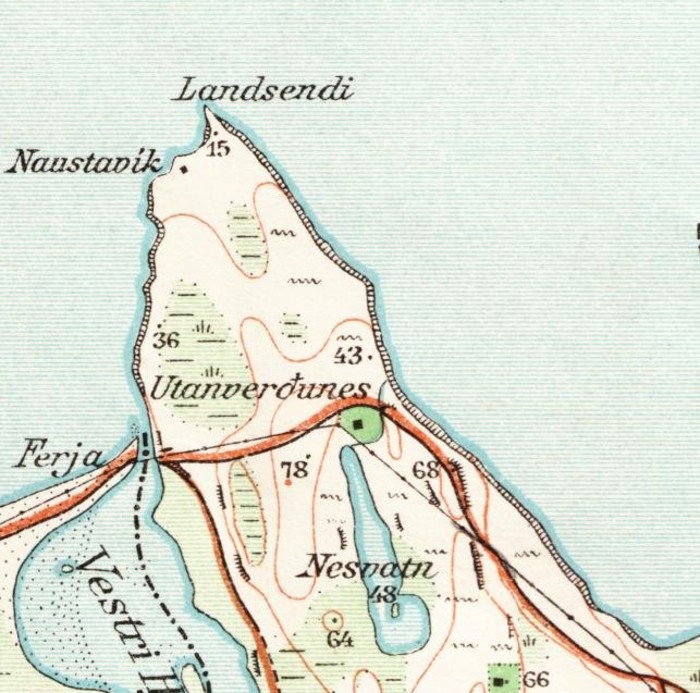
Hegranes is at the bottom of Skagafjörður north western Iceland. It reaches about ten kilometers inland and it’s northernmost part Utanverðunes goes into the fjord. Thousands of years ago, it was an island and is said to be home to one of the most densely populated communities of huldufólk (hidden people) in Iceland.
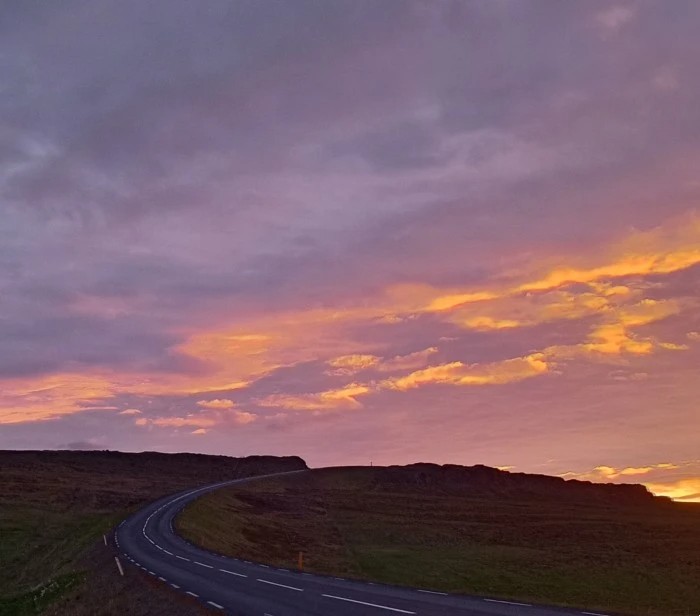
In the late seventies, plans were being made to renovate a road running across Utanverðunes and to facilitate the road construction, cliffs at a place called Tröllaskarð pass were to be blasted. However, messages emerged during a séance, and from other sources, warning that this should not be done, or it would lead to misfortune. These warnings came both through the country’s best known medium and in a vision and dreams of others.
It was during a séance with Hafsteinn Björnsson in Sauðárkrókur that a voice from beyond asked what was happening with Tröllaskarð. The question was directed at Erla, the wife of the local operations manager of the Road Administration. She was unfamiliar with any place called Tröllaskarð, but after the session, a road worker’s wife informed her that a road was indeed planned through the pass. The next day, another séance was held. By then, Erla had asked her husband about the project and was able to tell the spirit guide Rúnólfur that she now knew the details.
She was told that the rocks in Tröllaskarð were sacred and protected by a spell placed long ago by a woman of the huldufólk named Gríma. Many deceased farmers from the peninsula were also opposed to the destruction of Tröllaskarð. While it was acceptable for the road to pass through the area, blasting was strictly forbidden. If explosives were used, retribution would follow in proportion to the extent of the damage. As requested, Erla passed the message on to her husband Gísli, who then relayed it to his superiors. However, construction of the road began, gradually approaching the pass from two directions.
Next, a young farmer from a neighbouring farm came to Gísli and, somewhat awkwardly, told him that he had a message he had promised to deliver from his mother. She lived in Ísafjörður but had been visiting when she felt as though a well-dressed man with a dog had appeared to her, warning that blasting should not take place in the pass. She didn’t understand what he meant but asked what would happen if it did. The answer was that the consequences would be directly proportional to the act. This too Gísli relayed to his bosses.
At this point, the people at the Road Administration headquarters in Reykjavík began to worry about the situation developing in Skagafjörður. It was eventually decided to hold a secret séance with the medium, Hafsteinn. The séance was attended by the couple Erla and Gísli, the road designer, and two other representatives from the Road Administration.
None of the Road Administration employees had ever attended a séance, but they were soon convinced of Hafsteinn’s abilities after deceased individuals connected to them came through and communicated. The spirit guide, Rúnólfur, who spoke through Hafsteinn, detailed the construction plan for Tröllaskarð and was very familiar with it. During this meeting, it was revealed that both deceased farmers from the area and the hidden people (huldufólk) were opposed to blasting in Tröllaskarð.
This was a much larger change than simply moving or avoiding a single elf stone, as had been done in the past. The road designer was especially dissatisfied and tried to negotiate whether it might be possible to blast just a little. He asked to speak directly to Gríma but was informed that she was not present in the spirit realm where Rúnólfur resided. The meeting ended with Rúnólfur being tasked with establishing direct contact with her before proceeding further.
Before negotiations could continue, however, Hafsteinn the medium suddenly passed away while working at haymaking in Hafnarfjörður. Obituaries were written about him in all the major newspapers, but the Road Administration was left in uncertainty.
Although the meeting had been kept secret, word spread, and unrest began to grow among the road workers. The road designer tried to continue negotiations with the help of two clairvoyant women but received conflicting answers. Eventually, it was decided to abandon the blasting and instead lay the road over the rocks on one side of the pass, even though this would result in a blind rise.
But the forces from beyond were still not at ease, and the foreman Alfreð dreamed twice that he was standing by the pass. In the first dream, he felt as though he were being attacked but was protected by a group leader, a young man who was studying to become a priest. In the second dream, he was thrown to the ground and held there until he promised that nothing would be disturbed. He became so troubled by these dreams that he considered resigning from the project. The road was constructed slowly and carefully, and Alfreð was vigilant, always making sure that as little was disturbed as possible.
Today, on Utanverðunes, a large blind rise reminds of when the Road Administration yielded to the demands of spirits and hidden people, not to blast the cliffs in Tröllaskarð. Despite the danger that blind rises can cause, it is said that no serious accidents have occurred there, and people believe the hidden people watch over travelers.
Sources in English
- The Elves Point of View. Fabula, 2000, vol. 41, iss. 1/2
- Hafsteinn Björnsson. Mystic Iceland
- Huldufólk. Wikipedia
- Being Elveswhere (2015). Páll Ásgeir Ásgeirsson
Sources in Icelandic
- Galdrasögur. Íslenzkar þjóðsögur og ævintýri (1960). Jón Árnason
- Hjólaskóflur og huldufólk. Þjóðerni í þúsund ár? (2003). Valdimar Tr. Hafstein
- Huldufólkið og hefndir Grímu. Skagfirðingabók, 1997
- Huliðsöflin allt um kring (1993). Einar Ingvi Magnússon
- Menn verða varir við huldufólk. Íslenzkar þjóðsögur (1978). Ólafur Davíðsson
- Utanverðunes. Nafnið
- Vegagerð á miðilsfundi vegna meints álagabletts í Hegranesi. Morgunblaðið B, 22. ágúst 1997