The Gold Ship
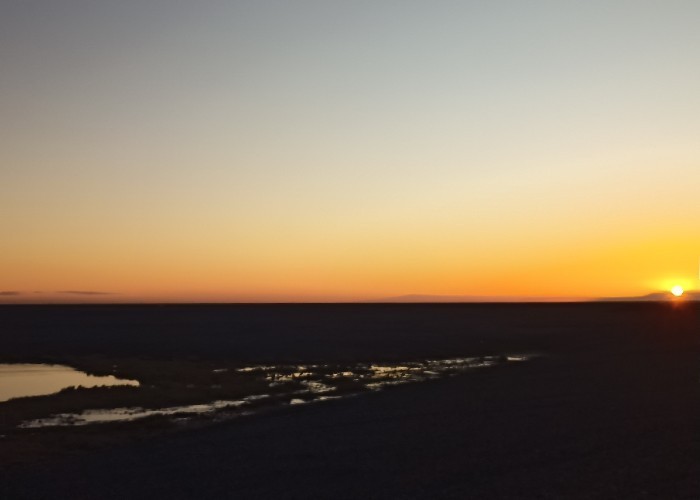
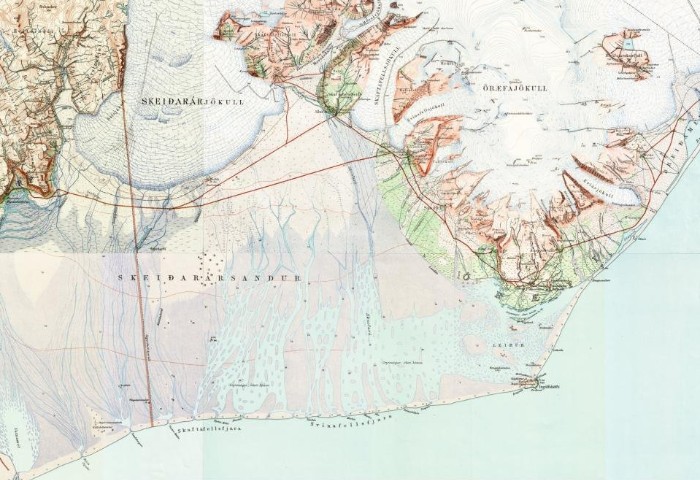
On September 19th, 1667, during a violent storm with strong southern winds, a Dutch merchant ship loaded with valuable cargo and carrying about 200 crew members and passengers was wrecked on Skeiðarársandur. Most, if not all, managed to get off the ship, but only about a quarter survived the sands. The cold and the heavy surf claimed the rest. The sea buried the ship in the sand, but for about a hundred years the masts protruded above the surface until they were sawn off and used for timber. After that the wreck was lost, and many attempts have been made to find it again and the valuables that might still lie within it.
In Iceland, the ship has been called the Gold Ship, but its name was Het Wapen van Amsterdam, and it was one of the largest and most magnificent ships ever built there. It was made for voyages to and from the West Indies and set out on its final journey from Batavia, which today is called Jakarta. It was supposed to depart in December, but due to delays, it did not leave until January. The Coat of Arms of Amsterdam, as its name translates into English, sailed in convoy with eight other Dutch merchant ships, and their route went from Asia, south around Africa, and north to Europe, a journey of about eight months.
When they reached the Cape of Good Hope in South Africa, three more ships joined the fleet, bringing the message that, because of the war between the Dutch and the English, it was not safe to sail directly through the English Channel on the return journey. Instead, they were to sail north around Britain to the Shetland Islands off the coast of Scotland, where warships were waiting to escort them through the North Sea to Amsterdam.
But shortly before the ships reached their destination, a violent storm struck, scattering the fleet and driving the ships northwest toward the Faroe Islands. One was wrecked nearby, but others managed to find shelter between the islands. Het Wapen van Amsterdam was driven all the way to Iceland, where it was wrecked off the coast of Skeiðarársandur.
Off Skeiðarársandur, sand reefs extend far out to sea, and many ships have been lost there since the time of the settlement of Iceland, if not earlier. The sands are called a ship graveyard, and buried along the shore and on the seabed lie numerous shipwrecks from different periods and of various nationalities.
It is known that the farmers in the area made use of what they could from the wreck’s cargo, even though the governor at Bessastaðir issued an order declaring that everything from the wreck was the property of the king and made the district commissioners responsible for transporting all valuables to him. Timber from the cargo was used locally, and for a long time the bedding in nearby farms was made from Persian silk. The cargo list details, in addition to timber and silk, rare and exotic goods such as cotton, spices, oriental medicines, tea, perfumes, and what has attracted the most attention from treasure hunters, copper, pearls, precious stones, and uncut diamonds.
Sources say that the cargo was valued at 43 barrels of gold. In later retellings, this changed into claims that this amount of gold had actually been on board. However, gold and silver were shipped from Europe to pay for goods in Asia, not the other way around. It is possible, though, that some surplus remained after trading and was brought back. It is also known that crew members, especially the officers, engaged in private trade, which the trading company turned a blind eye to, even though it was technically forbidden. The profits from such trade could be many times greater than the wages the crew received.
Throughout the centuries, many have wandered across Skeiðarársandur in search of the fabled treasure, but the first official permit for such a quest was not issued until 1960. With authorization from the authorities and the landowner, the sands were explored using various types of equipment. At last, the seekers believed they had found the Gold Ship, and in 1983 the government granted a state guarantee to finance an excavation. Steel sheet piles were driven into the ground around the supposed wreck, which, however, turned out to be some 250 years younger remains of a German trawler.
The last organized search known to have taken place began in 2016 and may still be ongoing. The latest technology has been employed, using drones to map and examine the most likely area, but no results have yet been reported.
Thus, the flagship of the Dutch trading company Kamer Amsterdam still lies buried somewhere beneath the sands of Skeiðarársandur, preserving a treasure that most likely consists mainly of archaeological relics, and perhaps, possibly, also precious metals, pearls, and gemstones.
Sources in English
- Mission Story. Anno 1667
- Het Wapen van Amsterdam. Wikipedia
- The Stranding of Het Wapen Van Amsterdam in 1667. Klaustur
Sources in Icelandic
- Gullskip á sjó og gullskip á landi. Morgunblaðið, 26. júní 1983
- Het Wapen van Amsterdam. Wikipedia
- Hvar er akkeri gullskipsins sem sökk undan ströndum Skeiðarársands? Vísindavefurinn
- Hvers vegna strandaði gullskipið við Ísland? Lesbók Morgunblaðsins, 3. júlí 1982
- Í leit að gullskipinu. Morgunblaðið, 28. maí 1972
- Indlandsfar hlaðið gulli og gimsteinum strandar á Íslandi. Lesbók Morgunblaðsins, 3. maí 1936
- Leit að gullskipinu hefst á ný. DV, vikublað, 19.–21. apríl 2016
- Möstrin sáust í hundrað ár. DV, helgarblað, 21.–25. ágúst 2016
- Piparskipið sem varð að gullskipi. Morgunblaðið, 1. júní 1983
- Það yrði ekki minni áhugi fyrir fundi þess en „Vasa.“ Vísir, 27. janúar 1968
- Staðsetning „Gullskipsins“ í fjörukambinum. Morgunblaðið, 9. ágúst 1983
- Skipsstrandið við Skeiðarársand 1667. Heima er bezt, 1. nóvember 1966